
Who are we?

Solidaritet is a trade union established by Poles for Poles working in Norway.

Since 28 January 2014, we have been continuously acting in the interest of our members, consistently supporting them in the fight for workers’ rights. For over two years, we have effectively provided assistance to members requiring professional support, offering both advisory services and concrete legal actions.

The impulse for establishing the Solidaritet trade union came from the problems encountered by workers in workplaces across Norway. From the very beginning, our activities have focused on counteracting abuses and strengthening the position of workers in the labour market.

Solidaritet is an open organisation – membership is available not only to Polish citizens, but to anyone experiencing unfair treatment or unlawful practices by employers in Norway.

Our actions bring measurable results – we have won over 200 court cases, effectively representing our members and contributing to improved labour standards.

We are also active internationally – we participate in forums and debates within the United Nations, EU institutions, and the International Labour Organization (ILO). We have repeatedly acted as experts on labour rights issues, sharing our experience and practical knowledge.

We are also engaged in promoting social dialogue and analysing the impact of new technologies on the work environment, including their consequences for workers’ rights, work organisation, and job security.

For many years we have been effective on behalf of members of our organization
in improving their working conditions.

Cooperating law firms
0 +
Companies we are in
0 +
Members
0 +
Solved cases
0 +

For many years we have been effectively defending the interests of Polish employees

Our team

Artur

Founder and initiator of the Solidaritet trade union, a person distinguished by ambition, versatility and a passion for literature, film and travel. He holds a solid, interdisciplinary education in law, sociology and economics and is fluent in Polish, Norwegian, English, German and Russian.

He began his professional career in Polish and international financial institutions, gaining experience in economic analysis and the functioning of markets. He then worked as a market analyst at Roper Starch Worldwide in the United States, and later in a Norwegian logistics company, where he gained practical knowledge of labour market realities. These experiences led him to establish and lead a trade union dedicated to the protection of workers’ rights and social justice.

He is a member of the Norwegian-Polish Chamber of Commerce, a participant of the Congress of Regions, and has also been a guest of honour of Norwegian Prime Minister Erna Solberg as well as a participant in a meeting with the President of Poland Andrzej Duda during his visit to Norway. He is widely recognized as a committed defender of human rights and workers’ rights, active both nationally and internationally.

He has completed numerous specialized courses and international programs, including those organized by the International Labour Organization (ILO) concerning decent work, responsible business conduct and the social and solidarity economy. His academic development also includes programs conducted, among others, in the Netherlands, Germany and within international human rights academies.

He holds an LL.M. degree in European and International Law, specializing in European integration, economic law and human rights. He has also completed postgraduate studies in:
• labour law (Norway),
• Chinese law and economy (Poland),
• an interdisciplinary European program on urban development and smart cities, carried out in international cooperation (France, Germany, Czech Republic, Italy).

He also has a solid foundation in the American legal system (common law), obtained through educational programs carried out in cooperation with:
• Emory University School of Law (USA)
• Georgia State University College of Law (USA)

He is also a certified mediator, with extensive experience in mediation, negotiation and dispute resolution, confirmed by numerous trainings and certificates in civil, commercial and family mediation. His competences also include issues related to artificial intelligence in law, human rights in business and international criminal law.

He is a member of prestigious international organizations.

His work combines legal expertise, social engagement and an international perspective, making him a strong voice in the fields of labour law, human rights and just economic transformation.
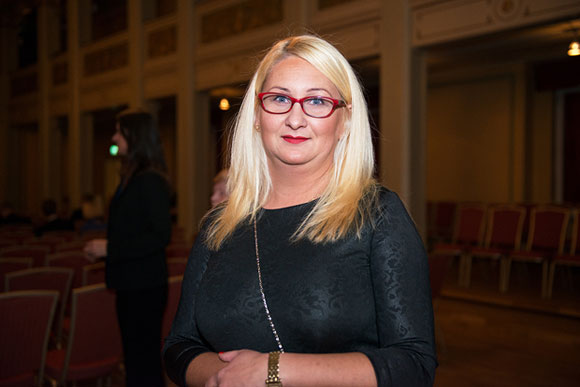
Joanna

Educated as economist, she took her first steps on the professional path in financial institutions and started her own business activity. Social and local government activist with high social sensitivity. Extremely hard-working yet finding time for her favourite hobbies such as green space design.
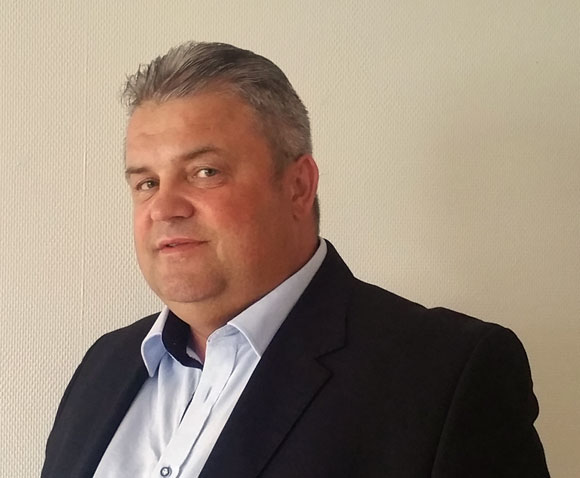
Jacek

He has been involved in international land transport since the 1990s. In the mid-1990s, working in Iceland in the fishing industry in a stand-alone position requiring key decision making. With the beginning of 2000 Mr. Jacek became one of the first Polish drivers in public transport in the capital of Iceland – Reykjavik. Next steps of the career were directed towards the construction industry as a heavy construction equipment operator. She moved to Norway in 2011. An exceptionally modest man who values honesty and diligence. In his free time he devotes himself to his passions, i.e. fishing, watching sensational and documentary films, sport shooting and martial arts.

Solidaritet
Privacy Policy

Privacy Policy – Solidaritet

Solidaritet is the data controller and is responsible for ensuring that the information we hold about you as a member is used in accordance with the applicable data protection legislation at any given time (the Norwegian Personal Data Act implementing the EU/EEA General Data Protection Regulation – GDPR).

In this Privacy Policy, we provide you as a member with information on how we use and protect your personal data and what rights you have.
Personal data means any information that can be linked to you as an individual.


What data do we process about you?

Data provided by you

When you join Solidaritet and make use of our membership services, you typically provide us with the following data:

  • Contact and membership details, such as: name, age, personal identification number, home address, e-mail address, telephone number, employer, job title with your employer, possible salary information, and information about your role within the organisation (e.g. central or local representative, if applicable);
  • Payment information, such as salary information, payment method for your membership fee (bank transfer or deduction from salary in accordance with the Working Environment Act and the relevant collective agreement) and bank account number;
  • Communication data, such as correspondence with our member service department or contact with our advisors, lawyers, negotiators and other employees;
  • Case-related information, meaning documents and data you send us in order to present your individual case to Solidaritet; this may include information on your health, employment situation, economic circumstances, family situation, inheritance, etc. You provide this voluntarily, but in many cases such documentation is necessary for us to be able to give you proper advice and assistance;
  • Information regarding participation in courses, such as contact and membership details, employer, course certificates, information about allergies (for catering purposes), and other data necessary to organise and document your participation.


Data collected about you

As a member of Solidaritet, we may also process data obtained in the following ways:

  • Information from elected representatives – local representatives may pass on information they have received from your employer;
  • Information from publicly available registers – Solidaritet may verify your data against the National Population Register (Folkeregisteret) to ensure that we have correct contact details;
  • Photos – Solidaritet may take photographs during events such as courses or social activities, provided that you have given valid consent for such use of your image.


Why do we process your data?

  1. To identify you as a member, manage your membership and provide services

Typical data used for this purpose: contact and membership details, correspondence, case information, course information.

Legal basis:

  • necessity for the performance of the membership agreement (GDPR Article 6(1)(b)),
  • necessity for the purposes of our legitimate objectives, including protecting and promoting the interests and rights of our members (GDPR Article 6(1)(f)),
  • processing data about trade union membership is carried out in accordance with GDPR Article 9(2)(d).

Solidaritet’s objectives:

  1. Solidaritet protects and promotes the interests of its members in professional, economic, health and safety, and social matters related to employment.
  2. Solidaritet works to strengthen the professional rights of its members and the rights of representatives, and to improve their ability to carry out their roles.
  3. Solidaritet cooperates with organisations and unions that support the rights of workers.
  4. Solidaritet provides a competitive membership offer for employees in all sectors of working life.
  5. Solidaritet works towards a non-discriminatory working life in which members are ensured co-determination and influence over their working conditions.


  1. To calculate and collect membership fees

Data processed: contact details, membership data and payment information.
Legal basis: necessity for the performance of the membership agreement (GDPR Article 6(1)(b)).


  1. For marketing purposes

Data used: name and photos from courses and events.
Legal basis: legitimate interest (GDPR Article 6(1)(f)); where consent is required by law – GDPR Article 6(1)(a).

  1. To send information, newsletters and invitations

Data used: name, phone number, e-mail address.
Legal basis: legitimate interest (GDPR Article 6(1)(f)) and Article 9(2)(d) with regard to special-category data (trade union membership).

  1. To compile statistics

Primarily anonymised data are used; where personal data are involved, consent will be required.

  1. For other compatible purposes

For example: handling individual cases, complaints, and legal disputes.

Who do we share your data with?

Solidaritet shares data with the following entities:

  • providers of IT services (data processors);
  • companies carrying out anonymous surveys or ballots (they may receive your e-mail address);
  • partners offering membership benefits – they may receive your name and personal identification number to verify your entitlement to a benefit;
  • marketing partners – only on the basis of your consent;
  • the entity issuing membership cards (where applicable);
  • local representatives – only contact, membership and payment information.

Data processing agreements are in place with all external service providers.


Representatives of Solidaritet

Local representatives have access only to contact details, membership data and payment information.
They do not have access to case-related documents without your explicit consent.


 “Min Side” (My Page)

Every member has access to “Min Side”, where they can:

  • edit their personal data;
  • view their membership information.


How do we protect your data?

Solidaritet ensures data confidentiality by:

  • requiring all employees to sign confidentiality agreements;
  • lawyers being bound by statutory professional secrecy;
  • local representatives being subject to confidentiality obligations under law and agreements;
  • applying technical and organisational security measures, including access controls in IT systems.


How long do we store your data?

  • Data are stored for as long as you remain a member.
  • After termination of membership, data are deleted within 6 months.
  • Exceptions: data that must be retained under statutory obligations (e.g. accounting records).
  • Data may be stored for a longer period if they relate to an ongoing case, complaint or legal dispute.


Your data protection rights

You have the right to:

  • information,
  • access to your data,
  • rectification,
  • erasure,
  • restriction of processing,
  • data portability,
  • object to processing and profiling.

Some rights may be limited by law.


Complaints

If you believe that your data are being processed unlawfully, you may lodge a complaint with the Norwegian Data Protection Authority (Datatilsynet).
We encourage you, however, to contact us first.


Changes to this Privacy Policy

This Privacy Policy may be updated.
The most recent version will always be available on our website.

Contact details – Solidaritet

Address:
Solidaritet
Postboks 359
1401 Ski

Phone: +47 48 444 114
E-mail: data@solidaritetnorge.no
Website: www.solidaritet.no